By Ulemu Mbengwani
From mining to agriculture, Africa holds immense untapped potential, as much of its wealth is exported in raw form with limited local value addition. In Malawi, for instance, this is evident as groundnuts are exported in relatively large quantities, yet peanut butter is not produced at the same scale.
Beyond exports, the challenge is equally visible in local markets. During tomato season, heaps of discarded produce can be seen along the M1 Road in places like Songani and Lizulu, a direct result of limited access to processing equipment that could preserve tomatoes and extend their shelf life.
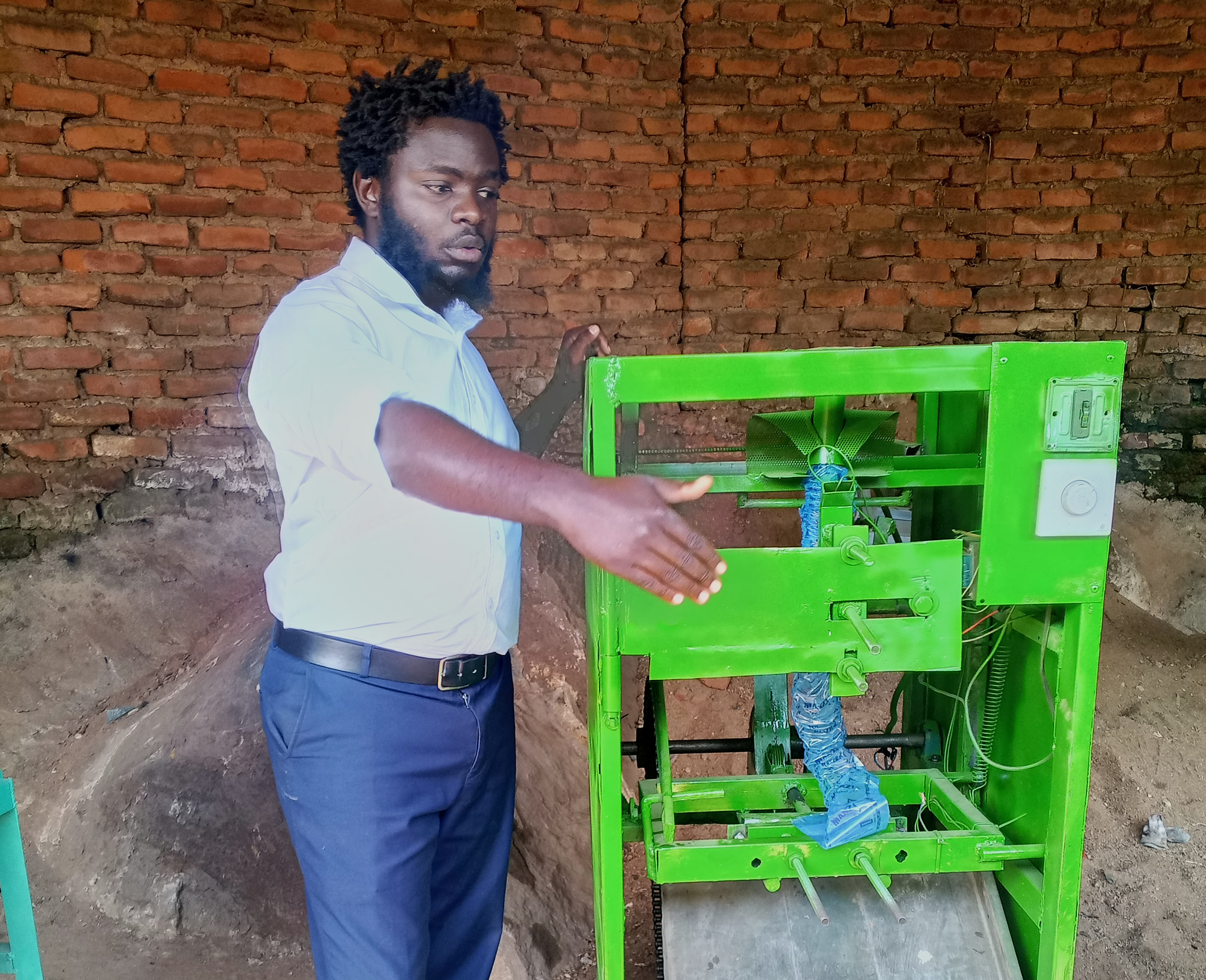
It is in the midst of this challenge that an innovator has stepped forward, designing agri-processing equipment such as Sugarcane Crushers, Oil Press Machines, Peanut Butter Machines, Grinders and Mixers, as well as Corn Shellers. These machines are tackling wastage, boosting productivity, and unlocking new opportunities for farmers and agribusinesses.
Behind these innovations is Thunyako Vitumbiko Mfune, a 33-year-old Malawian whose journey has taken an unexpected turn. After studying medicine and surgery with a specialization in oncology, he transitioned into engineering, where he now focuses on the design and fabrication of agricultural and agri-processing machinery, among other innovations.
“I was inspired to start Thunyako Machineries by a combination of my background in medicine and surgery, my passion for engineering, and a desire to make a positive impact in the agricultural sector,” he explains.
“My experiences in oncology highlighted the importance of food security and accessible healthcare, which prompted me to explore ways of contributing to the local economy. Recognizing the challenges faced by farmers and agro-processors in Malawi, I saw an opportunity to create innovative machinery that would enhance productivity and efficiency in agriculture,” he adds.
As the conversation shifted to how he acquired his fabrication skills, his response was humorous before he revealed the full story.
“Well, I guess I am just wired differently. Medicine taught me precision and problem-solving, and I applied that to machines. Turns out they respond well to a surgeon’s touch!”
“Honestly, I have always been curious about how things work, whether it is the human body or a machine. I just put in the time, experimented, and figured things out. Success is all about persistence,” he says.
Thunyako believes that some skills are not taught but discovered, and that he just has a natural knack for fixing what needs fixing, whether people or machines.
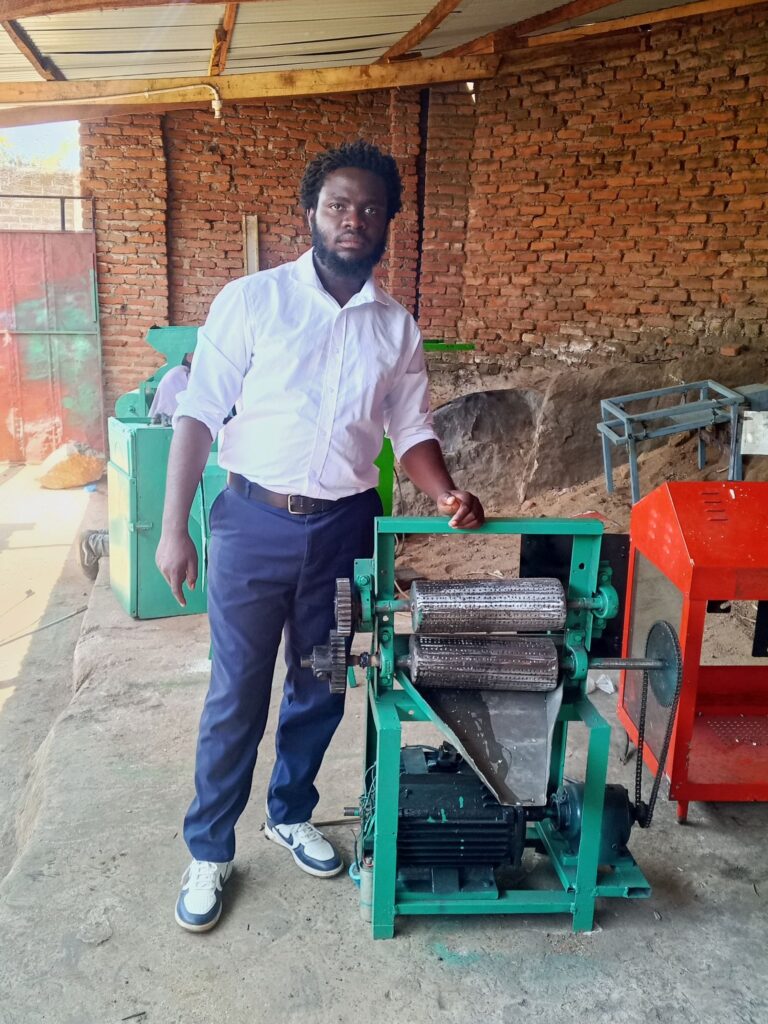
“Machines and humans are quite similar, as they both break down in frustrating ways. Luckily, I have learned how to fix both,” he said.
According to him, troubleshooting complex systems in medicine is much like engineering. It is all about understanding the parts and how they work together, he added.
However, Thunyako Machineries did not thrive without facing its unique set of challenges. Limited capital was a significant constraint, as the business was entirely self-sponsored, restricting growth and production capacity. Entering the agricultural machinery market also exposed a knowledge gap and understanding what local farmers truly needed took time.
A small workforce of just two people further slowed scaling, while competing in international markets like Zambia and South Africa meant going head-to-head with established manufacturers.
“On top of this, the technical demands of designing machinery without a formal engineering background presented a steep learning curve,” he admits.
To overcome these hurdles, Thunyako adopted several strategic measures. He bootstrapped the business using earnings from his medical career, maintaining full control and financial independence.
At the same time, taking a customer-centric approach, the company expanded its product line to meet farmers’ evolving needs. Early products like peanut butter-making machines soon gave way to higher-demand equipment, including sugarcane crushers and oil extractors.
With a small team, Thunyako prioritized quality over quantity, ensuring his equipment could compete on an international level. Partnerships and collaboration with institutions like the Technical Entrepreneurial Vocational and Education Training Authority (TEVETA) to train students not only expanded his workforce but also positioned the company as a hub for skills development.
“He adds that his problem-solving mindset, honed in medicine, enabled creative innovation, allowing machinery designs to be refined through experimentation and hands-on learning.”
When he reflects on his journey, he notes that he has learned several valuable lessons, both from the challenges he faced and the strategies he employed to thrive.
“Starting with peanut butter-making machines, I quickly realized that the local market had broader needs for agricultural machinery. This taught me the importance of staying adaptable and listening to customer demands to expand my product range,” he shares.
Thunyako also emphasized the significance of quality and financial independence. With a small workforce, he prioritized producing high-quality machinery that could compete internationally. Funding the venture independently also highlighted the value of financial control and independence. He acknowledged that bootstrapping may be challenging, but it allows growth without external pressures or debt.
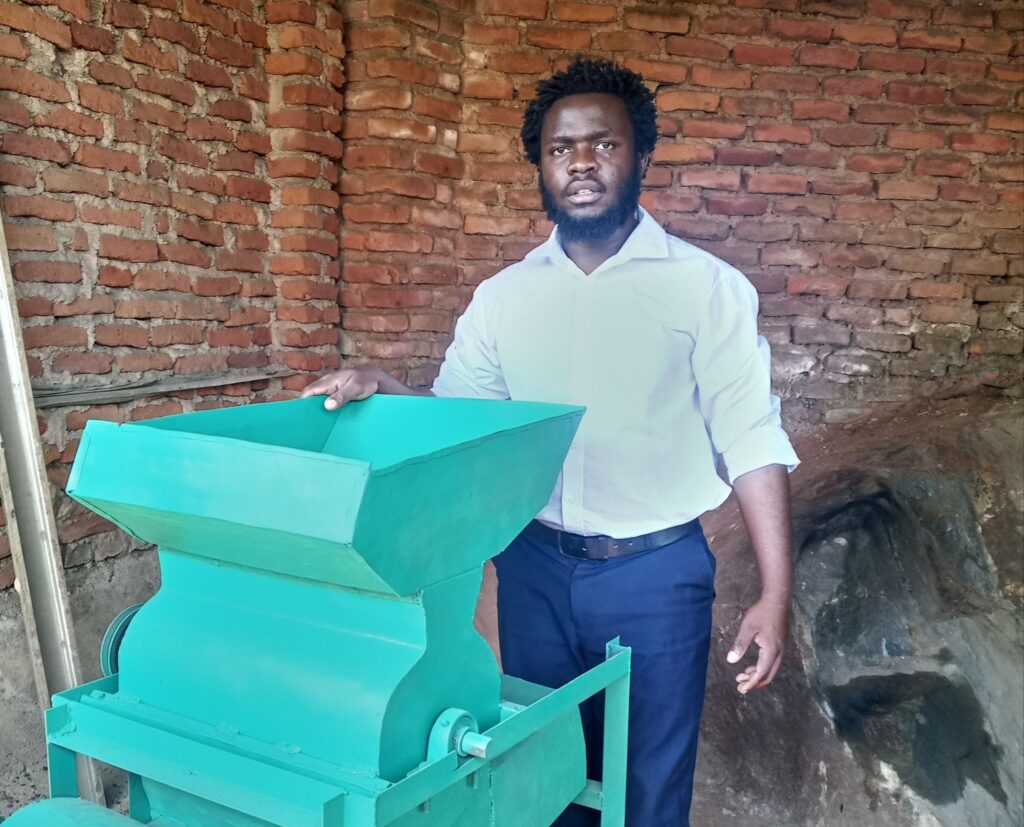
Despite not having a formal engineering background, curiosity, determination, and a problem-solving mindset have driven innovations that meet local needs while remaining competitive internationally.
“Serving local farmers while venturing into global markets taught me the importance of balancing local relevance with global competitiveness,” he says.
The results of this approach are evident. Thunyako Machineries is proud of its achievements, particularly the impact of their peanut butter machines in Malawi and beyond. “We have empowered local farmers, small businesses, and households by providing affordable, high-quality machines that let them process peanuts into valuable products,” he explains.
“Smallholder farmers now produce and sell peanut butter instead of raw peanuts, earning higher profits and better supporting their families. Women in rural areas have started small businesses around peanut butter production, creating steady income streams that help pay school fees, improve homes, and foster financial independence,” he shared.
Thunyako’s machines have also enabled local producers to meet growing demand both locally and regionally, opening new markets and helping entrepreneurs scale and compete internationally.
With his incredible journey from a self-sponsored startup to a recognized name in agricultural machinery, Thunyako believes he has valuable lessons for start-ups and entrepreneurs. “Start with what you have,” he advises. “Don’t wait for perfect conditions. I began with my own savings from my medical career. It was tough, but self-sponsoring gave me full control of my vision.”
He emphasizes the importance of solving real problems, noting that his business started by addressing a clear gap in agricultural machinery to help farmers add value to their produce.
Curiosity, learning, and quality have also been central to his success. Without a background in engineering, he taught himself and innovated through trial and error. Even with a small team, Thunyako focused on producing durable, high-performing machines, earning trust both locally and internationally. “Your reputation is built on the quality of your work,” he says.
Staying adaptable has been equally important. The company began with peanut butter machines but quickly diversified to meet demand for sugarcane crushers, oil extractors, and more. Collaboration, persistence, and vision round out his advice.
Reflecting on his journey, Thunyako concludes, “Challenges will come: limited resources, competition, steep learning curves, but persistence and belief in your vision are what keep you going.”
Clearly, the ripple effects are extending far beyond producing peanut butter, as they are now transforming lives, building businesses, and strengthening local economies. It is a powerful example of how innovation can drive social and economic change. At the heart of it all is a young Malawian innovator whose unusual path from medicine to engineering shows that with vision, resilience, and creativity, anything is possible.