By Ulemu Mbengwani
Think back to when you were 14. Chances are, business was the last thing on your mind. But for Sothini Shaba, those were the years he began trading clothing for brands like Nike and quietly discovering his path. By the time he reached Form Four, he trusted his instincts enough to leave school and begin building the future he envisioned for himself.
Now, at 26, he is the founder of his own shoe brand, carrying the confidence of someone forged by experience far beyond his age. However, to understand his success, one must look back at the experiences that shaped his path.
Since his teenage years, Sothini has studied the habits and strategies of world-class billionaires such as Bill Gates, Jeff Bezos, Elon Musk, Amancio Ortega, Aliko Dangote, Warren Buffett, Bernard Arnault, and others. He attended business conferences in Malawi featuring speakers like Napoleon Dzombe, all without ever attending university.
“Everything I know about business, manufacturing, and sustainability has been self-taught through relentless action and research,” he says.
In 2021, together with a factory designer from Indonesia, he co-founded his first sneaker brand, Wasaka, an Indonesian name meaning fight till the last drop of blood. The team built skateboard-style sneakers, launched a marketing campaign, and even began receiving pre-orders from Central Java (Indonesia).
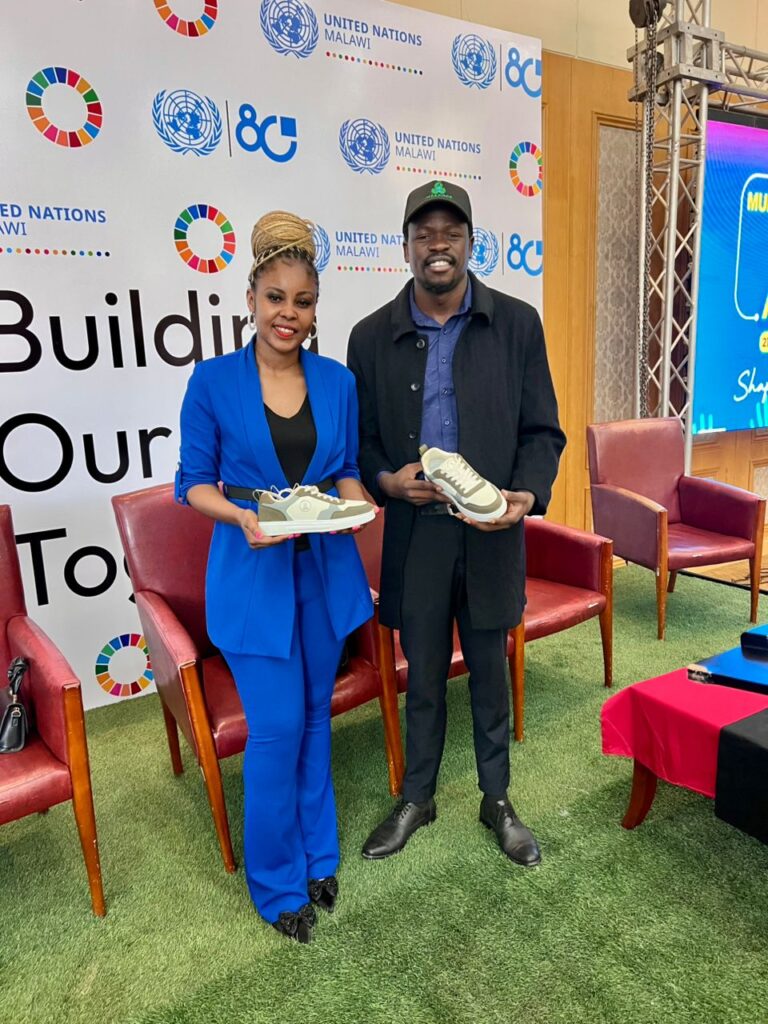
Amid this early success, he recognized that the next ten-year norm in fashion would revolve around sustainable, circular-economy practices. He proposed integrating strong eco-innovations into the product, but his partner was not convinced.
Driven by his deep commitment to addressing climate change and his belief that his generation must take responsibility for shaping a more sustainable future, he decided to walk away and start completely from scratch. This conviction ultimately led to the birth of Tefillah in 2023, a brand whose name translates to “prayer” in Hebrew, built on the firm belief that fashion can and must contribute to healing the planet.
Tefillah was built on the belief that African-founded brands can drive the global shift from linear to circular fashion. Its mission is to reduce massive carbon footprints, turn waste into value, create thousands of green jobs across the continent, and make sustainable living the cultural norm rather than a premium choice.
“The gap Tefillah is addressing is significant. Globally, the fashion industry produces 10% of greenhouse gas emissions, more than international aviation and shipping combined, along with 20% of wastewater pollution and 92 million tonnes of textile waste every year (UN & Ellen MacArthur Foundation, 2024–2025). In Africa, there is almost no local capacity for ethical and sustainable manufacturing of eco-friendly footwear materials,” Sothini explains.
Tefillah is tackling both challenges head-on by building fully circular sneakers and developing processing and manufacturing plants in Malawi and other African countries, moving the continent beyond raw-material exports and toward becoming a hub for innovation in sustainable fashion.
Building on the gaps in the fashion industry, Tefillah has placed sustainability and circular innovation at the heart of its operations.

“Tefillah is not just ‘eco-friendly’ — we are fully circular from day one. A circular business model means designing out waste and pollution, keeping products and materials in use for as long as possible, and regenerating natural systems. Every pair of shoes is made with recycled PET plastics, recycled PU, recycled rubber outsoles, and organic cotton,” Sothini explains.
More importantly, the brand is implementing a Digital Product Passport (DPP) system in collaboration with a tech company from Singapore. The DPP is a blockchain-based digital twin of each shoe that transparently shows every material source, carbon footprint, factory worker conditions, and provides instructions on how to repair, resell, or recycle the shoe at end-of-life. When the shoes can no longer be worn, customers return them to Tefillah, and the company remanufactures them into new pairs, closing the loop completely.
Since its founding, Tefillah has already achieved several notable milestones. The team successfully developed and tested a fully sustainable prototype using recycled PET, recycled PU, recycled rubber, and organic cotton. They launched a global e-commerce platform (www.tefillahfashion.com), enabling anyone in the world to pre-order, and implemented the Digital Product Passport system in partnership with the tech company from Singapore.
Even before mass production began, Sothini had built a community of early supporters and secured pre-orders. Remarkably, the idea evolved into a working prototype in under 18 months, all while bootstrapping in one of Africa’s most challenging economic environments.
Reflecting on his journey, Sothini emphasizes that success is rooted in perseverance. “Dreams only come true through relentless, repeated work, what I call perseverance. When you choose a different path, many people, sometimes even those close to you, will directly or indirectly try to slow you down. But a dream is never built on opinions or beliefs — it is built on consistent action, even when no one else believes yet. Perseverance always wins,” he says.
Building a sustainable fashion brand in Africa has not come without challenges. The continent is not yet industrialized for eco-friendly production, and Tefillah has faced several hurdles. There is a lack of local ethical processing and manufacturing facilities for sustainable materials, severe foreign exchange shortages in Malawi that complicate payments to overseas factories, and limited local expertise in climate-smart industrialization.
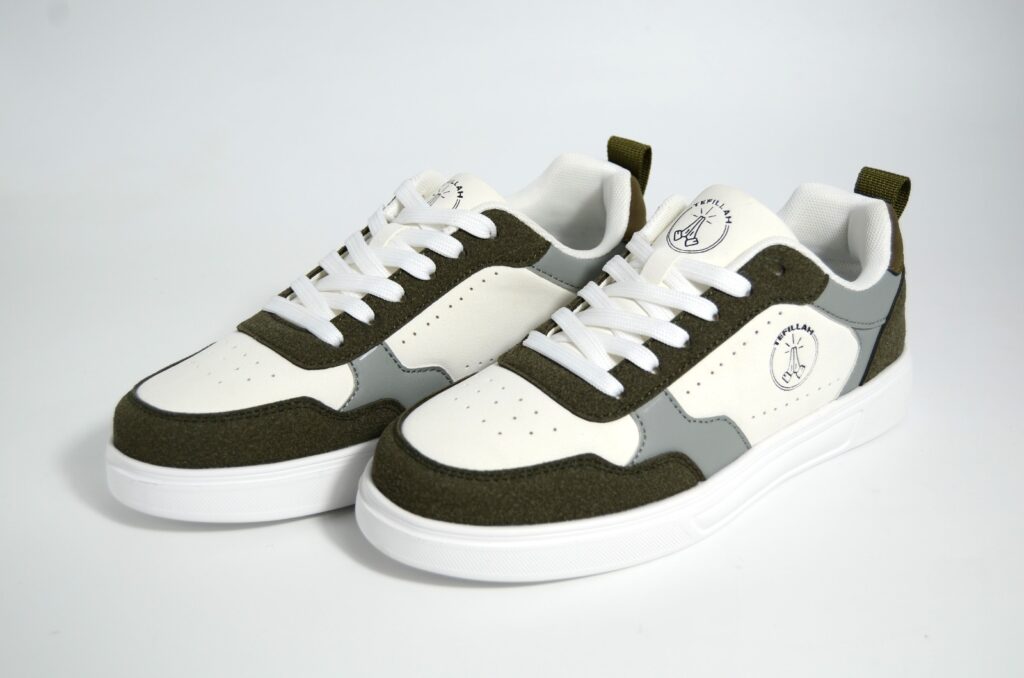
To navigate these obstacles, Sothini sources materials from certified sustainable factories in China while actively planning to bring the machines and factories to Malawi once the brand scales. For foreign exchange, he has built a network of Malawian friends in the diaspora who help secure clean dollars, which, while still costly, are safer than relying on the black market.
For expertise, he continues to self-educate and build a team that learns circular design principles from the ground up. The long-term solution is the investment Tefillah is currently raising, aimed at establishing the first circular footwear material processing plants on the continent.
Looking ahead, Sothini has set ambitious goals for Tefillah over the next five years. The brand aims to produce over 200,000 circular pairs per year and operate its own ethical material processing and shoe factories in Malawi and at least two other African countries. Tefillah also plans to take back and remanufacture more than 100,000 pairs, proving that the circular model works at scale, while creating thousands of direct and indirect green jobs.
Sothini envisions making sustainable, beautiful sneakers the cultural default across Africa and competing head-to-head with the biggest global brands, all while generating a net-positive impact on the climate. In his words, Tefillah hopes to pioneer the circular economy in footwear, drive the Fourth Industrial Revolution in Africa, and demonstrate to the world that profitability and planetary care can grow together.
Reflecting on his journey, Sothini offers advice to other young entrepreneurs. He recalls guidance from Strive Masiyiwa, who wrote, “Do not be satisfied with just the pathway but the destination.” For Sothini, years of buying and selling Nike and other brands represented the pathway. The destination, he explains, is manufacturing his own African brand that can change the world.
“Whatever you’re doing right now, ask yourself: ‘Is this the pathway or the destination?’ Keep moving until you reach the destination, and never let the lack of university, money, or connections stop you. The billionaires I studied didn’t wait for permission; they didn’t wait — they started,” he says.